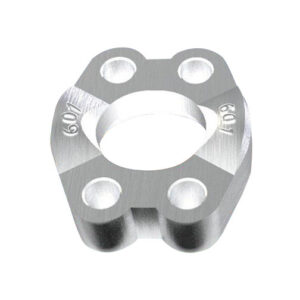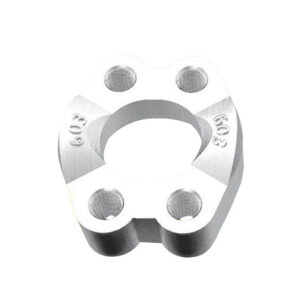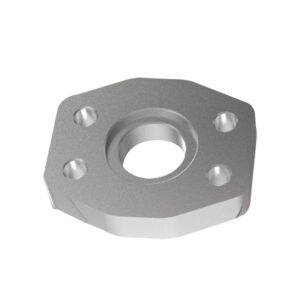
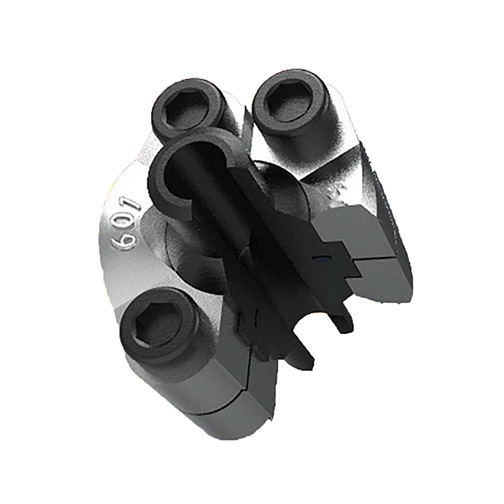
Flared Flange Working Principle and Product Full Introduction
Working Principle of Flared Flange
The working principle of the flared flange is to sleeve the flange onto the steel pipe, process the pipe end with a flaring machine, and install the flared flange cone sleeve into the steel pipe to achieve a reliable sealing effect. No welding is required for connection with steel pipes, which is conducive to fire prevention, explosion protection and high-altitude construction operations, and avoids various quality problems and safety hazards caused by irregular welding construction. Therefore, the flared flange is a highly stable pipeline connector for automatic control equipment in systems such as petroleum refining, chemical engineering, oil and gas, food processing, pharmaceutical production and instrumentation.
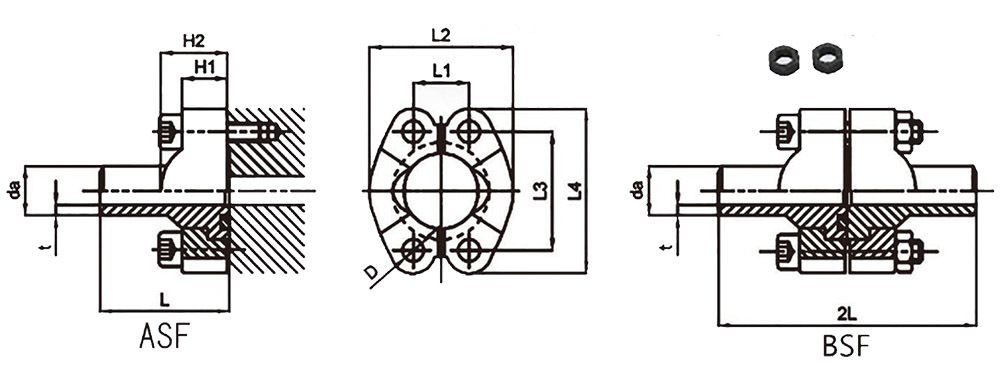
The flared flange includes a pipe fitting body with a through hole. At least one end of the pipe fitting body is equipped with a sealing device for pipeline sealing and a quick connection device for pipeline assembly. The flared flange is fitted with a locking cover for compression sealing and quick fastening connection.
This flared flange features a simple structure and convenient installation and operation, which effectively reduces overall engineering costs and greatly improves on-site construction and production efficiency.
Flange Pipe Fittings Overview
Flange pipe fittings are a common type of welded pipe accessories, specially manufactured for matching and connecting with various pipelines. Some finished fittings can be used directly without secondary processing, while others need further deep processing. Casting integrated fittings are integrally cast with flanges, and welded flange fittings are processed and welded in the later stage. All products can be processed and produced in factories or fabricated on construction sites. The product range includes reducer flange fittings, elbow flange fittings, tee flange fittings and other types, available in various materials such as carbon steel, alloy steel and stainless steel to meet different working condition requirements.
1. Classification by Material
Carbon Steel: ASTM/ASME A234 WPB, WPC
Alloy Steel: ASTM/ASME A234 WP1, WP12, WP11, WP22, WP5, WP91, WP911, 15Mo3, 15CrMoV, 35CrMoV
Stainless Steel: ASTM/ASME A403 WP304, 304L, 304H, 304LN, 304N; ASTM/ASME A403 WP316, 316L, 316H, 316LN, 316N, 316Ti; ASTM/ASME A403 WP321, 321H; ASTM/ASME A403 WP347, 347H
Low-temperature Steel: ASTM/ASME A402 WPL3, WPL6
High-performance Steel: ASTM/ASME A860 WPHY 42, 46, 52, 60, 65, 70
Other materials: Cast steel, alloy steel, stainless steel, copper, aluminum alloy, plastic, rubber, PVC, PPR, RFPP (reinforced polypropylene), etc.
2. Classification by Manufacturing Process
Divided into push forming, press forming, forging, casting and other production processes.
3. Classification by Manufacturing Standard
Divided into Chinese national standard, electric power standard, ship standard, chemical industry standard, water conservancy standard, American standard, German standard, Japanese standard, Russian standard and other international and industrial standards.
4. Classification by Curvature Radius
Divided into long-radius elbows and short-radius elbows. The curvature radius of a long-radius elbow is 1.5 times the outer diameter of the pipe (R=1.5D); the curvature radius of a short-radius elbow is equal to the outer diameter of the pipe (R=1.0D). (D refers to the elbow diameter, R refers to the curvature radius)
5. Classification by Pressure Rating
There are about 17 pressure grades, consistent with American pipeline standards, including Sch5s, Sch10s, Sch10, Sch20, Sch30, Sch40s, STD, Sch40, Sch60, Sch80s, XS, Sch80, SCH100, Sch120, Sch140, Sch160, XXS. Among them, STD and XS are the most commonly used grades for conventional projects.